Physical Address
304 North Cardinal St.
Dorchester Center, MA 02124
Physical Address
304 North Cardinal St.
Dorchester Center, MA 02124


Explore the design details that make a rustic bathroom vanity feel warm, custom, and truly handcrafted in both modern and traditional spaces.
A rustic bathroom vanity can do far more than hold a sink and conceal plumbing. It can anchor the entire room, introduce warmth through natural texture, and make a bathroom feel curated rather than copied from a catalog. The most memorable vanities are not simply rustic in color; they look intentionally made, with thoughtful proportions, tactile finishes, and construction details that suggest craftsmanship.
If you want a vanity that feels personal and enduring, the small choices matter. Wood grain, joinery, hardware, edge profiles, sink style, and finish all contribute to whether the piece reads as generic or genuinely handmade. This guide breaks down the most important rustic bathroom vanity details that create a handcrafted look, while also showing how to blend function with timeless design.
Rustic design appeals because it celebrates imperfection, honesty of materials, and visible character. In a bathroom filled with hard surfaces like tile, glass, and stone, wood introduces balance. A well-designed wood bathroom vanity softens the space and creates a lived-in, welcoming atmosphere.
What separates an ordinary rustic vanity from a standout one is authenticity. A handcrafted look does not come from distressing alone. It comes from construction that respects the material. Real wood movement, subtle tonal variation, hand-applied finishes, and custom sizing all give the vanity a more architectural presence. That is why many homeowners and designers prefer a custom bathroom vanity when they want the room to feel elevated rather than mass-produced.
The foundation of a handcrafted vanity is material quality. A real wood bathroom vanity has visual depth that veneers and laminates often struggle to replicate. Oak, walnut, maple, white pine, alder, and reclaimed woods each bring different personalities to the room.
If your goal is warmth without heaviness, choose wood with visible grain and moderate variation. If you want drama, darker species with hand-rubbed finishes create a stronger focal point. Whatever you choose, visible natural features such as cathedrals, knots, and mineral streaks often help the vanity look more bespoke.
Craftsmanship is often felt through texture before it is consciously noticed. Smooth, featureless surfaces can make a vanity feel overly manufactured. Brushed grain, lightly wire-textured panels, hand-sanded corners, and subtle saw marks all create dimension.
The goal is restraint. Texture should feel intentional, not artificial. A vanity with too much distressing can look themed rather than timeless. The best rustic designs preserve tactile interest while keeping the silhouette refined. This balance is especially effective in a custom wood bathroom vanity, where texture can be tailored to the architecture of the home.
One reason handcrafted furniture feels more luxurious is that it fits its setting. A vanity that is too narrow, too tall, or visually too bulky will always seem off, no matter how beautiful the material. A custom bathroom vanity allows you to calibrate width, depth, and height to the room and to the users.
For smaller bathrooms, shallower depths and open lower shelving can reduce visual weight. In larger primary baths, a longer vanity with strong vertical legs or framed drawer banks can add furniture-like elegance. A double sink wood bathroom vanity should not feel like a kitchen cabinet forced into a bathroom; it needs balanced spacing around sinks, comfortable landing areas, and practical storage zones.
When the proportions are right, the vanity appears integrated, as if it was designed with the room rather than installed after the fact.
One of the easiest ways to create a handcrafted look is to treat the vanity more like fine furniture. Cabinet toe-kicks often make stock vanities look utilitarian. By contrast, furniture-style features add personality and depth.
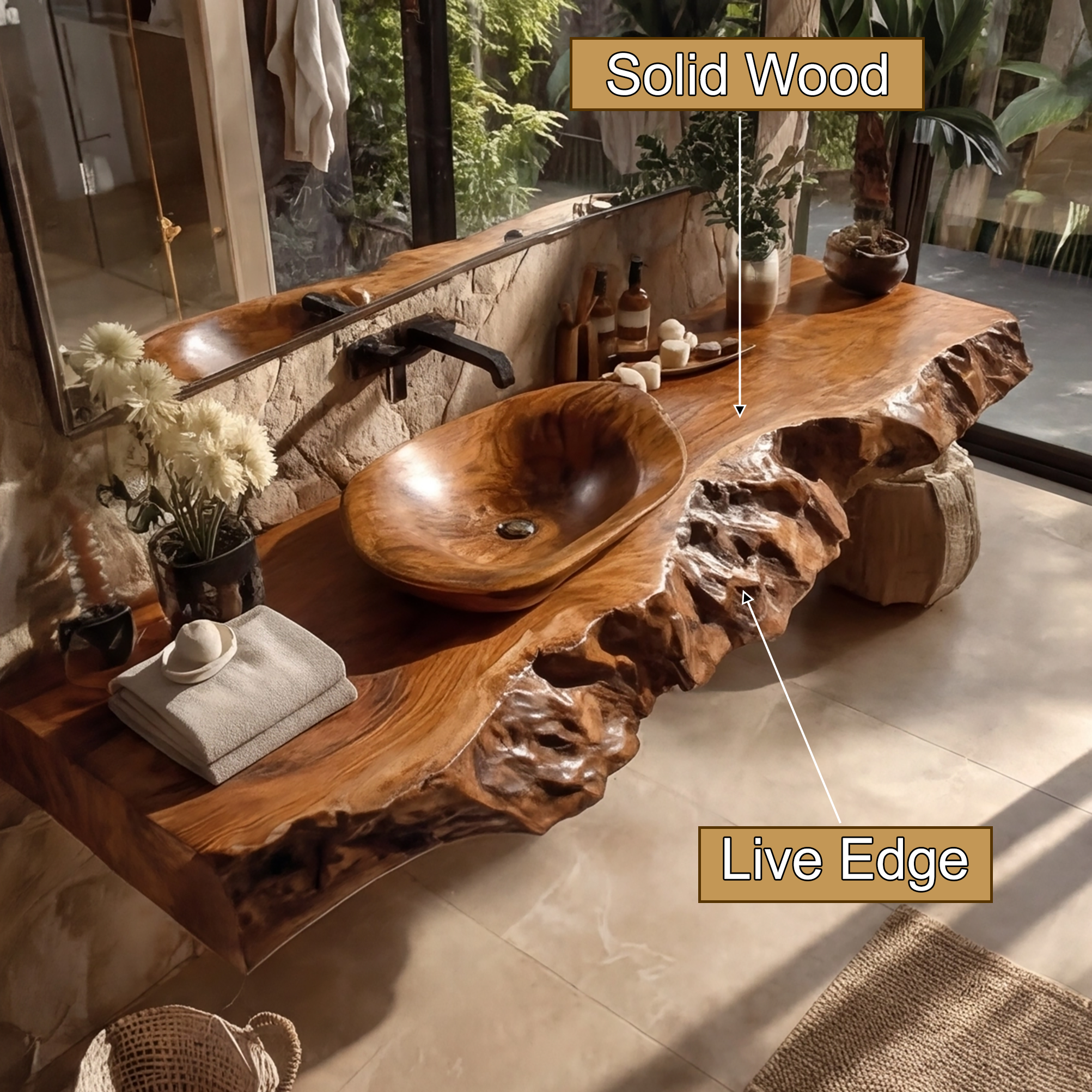
Even a floating wood bathroom vanity can benefit from furniture cues. A thick wood slab top, integrated open cubbies, or a shadow-reveal under the cabinet can give a wall-mounted design more artisanal presence.
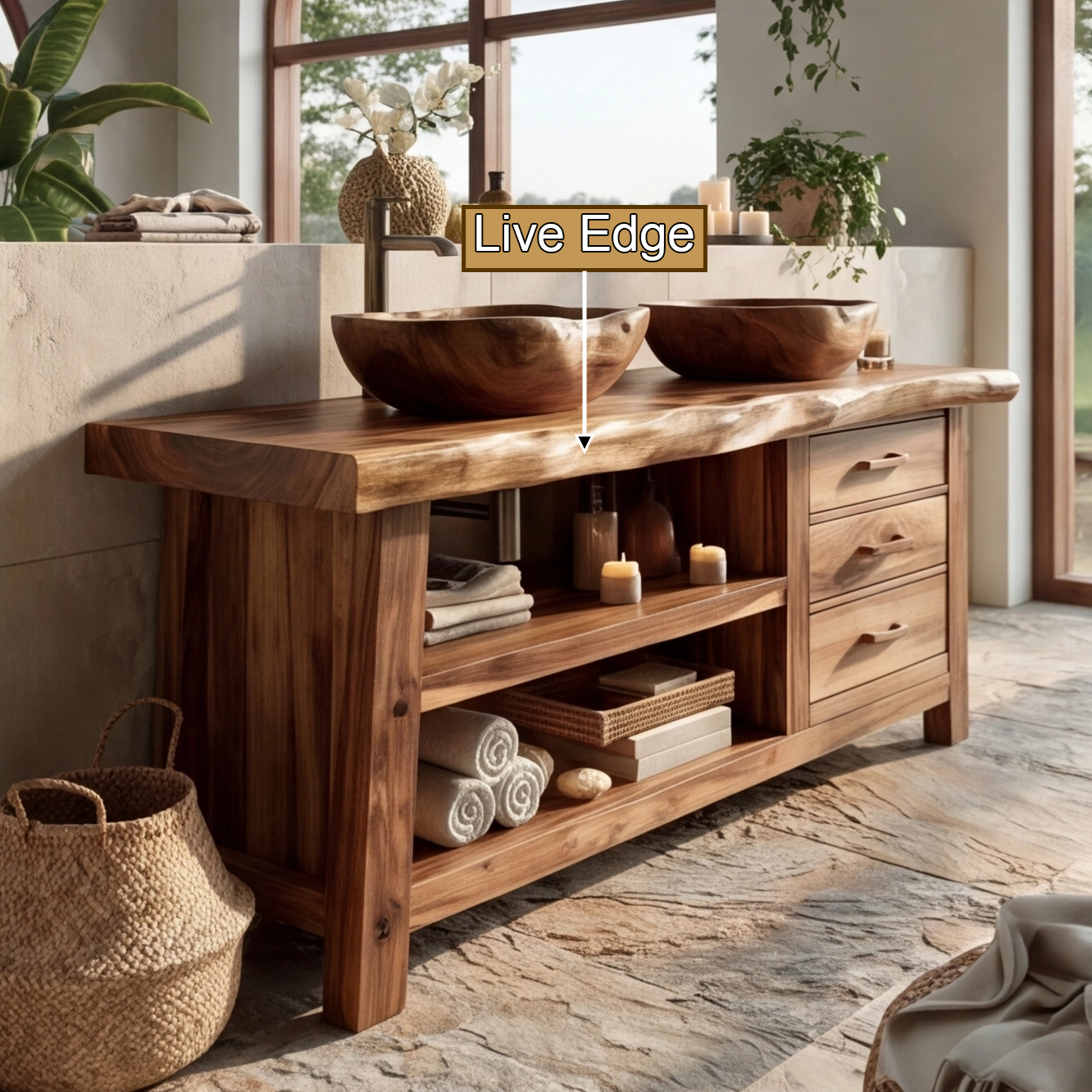
True handcrafted appeal often comes from the details most people do not immediately name. Exposed joinery, dovetail drawers, mortise-and-tenon construction, breadboard ends, and framed side panels all suggest quality and longevity.
You do not need every traditional woodworking technique on display, but a few visible cues can transform the vanity. Drawer boxes with solid wood sides, fully finished interiors, and thick face frames make the piece feel substantial. These are hallmarks often associated with a high end bathroom vanity, and they matter because they improve both performance and appearance.
Construction should also account for the bathroom environment. Proper sealing, ventilation around plumbing, and wood selection suited to humidity are essential if you want beauty that lasts.
Finish can either enhance the wood or flatten it. For a more handcrafted look, avoid finishes that appear overly glossy or plastic-like. Matte and satin sheens usually feel more natural and let the grain remain the star.
Popular rustic finish directions include:
Hand-rubbed finishing techniques create depth because pigment settles differently across the grain. This variation makes the vanity look more custom and less factory uniform. In a japandi bathroom vanity, a pale matte finish on straight-grained wood can create a calm, crafted simplicity that still feels rustic.
A handcrafted vanity becomes even more striking when paired with a countertop that complements the wood instead of competing with it. Honed marble, soapstone, leathered granite, quartzite, and concrete all work well depending on the look you want.
For a softer rustic palette, creamy stone with subtle movement keeps the space light. For more contrast, darker stone can ground lighter woods. Thick countertops often look more substantial and bespoke, particularly on a double sink wood bathroom vanity where the vanity spans a larger width.
Backsplashes should support the design, not distract from it. Low integrated splashes, slab remnants, or tiled walls behind the vanity can all work if they preserve the handcrafted focus.
The sink has a major influence on whether a rustic bathroom vanity feels casual, modern, or classically tailored. Undermount sinks maintain a clean furniture-like appearance and let the wood and stone lead. Vessel sinks can work in artisanal spaces, but they need enough visual restraint elsewhere to avoid feeling busy.
Integrated trough sinks, hammered metal basins, and apron-front sink concepts can all contribute character when used thoughtfully. For many homeowners, the most practical and timeless route is still an undermount sink paired with a carefully selected faucet finish such as aged brass, bronze, or matte black.
Hardware is often the jewelry of the vanity, but for rustic design it should feel grounded rather than flashy. The best pulls and knobs look as though they belong to the cabinet.

Scale matters. Oversized hardware can overwhelm a smaller vanity, while tiny pulls may disappear on larger drawer fronts. Consistency in finish across faucet, mirror frame, sconces, and hardware helps the room feel intentional.
Closed cabinetry is practical, but a vanity with some open storage often looks more crafted and custom. A lower shelf for rolled towels, woven baskets, or ceramic containers creates visual breathing room and reinforces the furniture feeling.
Open side niches can also be useful in tighter bathrooms. They allow the vanity to serve storage needs without appearing too blocky. This is especially helpful in a floating wood bathroom vanity, where selective openness can make the design feel lighter and more architectural.
Both freestanding and floating vanities can achieve a handcrafted aesthetic, but they communicate it differently.
A freestanding rustic vanity feels rooted and traditional. It often works best in farmhouse, mountain, transitional, and heritage-inspired bathrooms. Legs, aprons, and lower shelves reinforce the custom furniture look.
A floating wood bathroom vanity feels more contemporary while still showcasing natural materials. It is ideal for rustic-modern and Japandi-inspired spaces where clean lines matter. To keep a floating vanity from feeling too minimal, use thicker wood sections, rich grain, and handcrafted finish details.
Neither option is inherently better. The right choice depends on your architecture, storage needs, and how visually heavy or light you want the room to feel.
A double sink wood bathroom vanity offers convenience, but larger scale can sometimes reduce intimacy. To preserve a handcrafted feel, focus on rhythm and symmetry. Repeated drawer stacks, centered open shelves, and balanced mirror placement help the piece feel composed.
Long stretches of plain cabinetry can feel flat, so break them up with framing, vertical stiles, or contrasting countertop edges. Consider using individual mirrors instead of one oversized mirror to make each sink zone feel personal. Sconces placed thoughtfully on either side can also bring a more tailored, residential character.
In a primary suite, a well-executed double vanity can become the signature feature of the room, particularly when made from solid wood with custom sizing and premium storage planning.
Rustic does not have to mean rough. In fact, some of the most compelling bathrooms blend rustic warmth with refined execution. This is where a high end bathroom vanity truly excels. Fine craftsmanship, durable hardware, premium drawer glides, integrated organizers, and moisture-conscious construction can coexist with knots, texture, and matte finishes.
The result is a vanity that feels both approachable and luxurious. It invites touch, ages gracefully, and contributes to the overall architecture of the home rather than functioning as a temporary design statement.
The popularity of the japandi bathroom vanity reflects a larger movement toward calm, purposeful interiors. Japandi style combines Scandinavian warmth with Japanese restraint, which pairs naturally with handcrafted woodwork.
For this look, choose a vanity with clean lines, honest grain, and minimal hardware. White oak, ash, or walnut in a low-sheen finish works especially well. Open shelving should be sparse and curated. Stone countertops should remain quiet and tactile. The handcrafted feel comes not from ornament, but from material quality and disciplined simplicity.
This style proves that rustic design can feel serene and modern while still honoring the hand of the maker.
A vanity should be beautiful, but true craftsmanship includes functionality. When planning a rustic or custom vanity, think about how it will perform daily.
These practical upgrades often distinguish a bespoke custom bathroom vanity from a decorative but inconvenient one. A handcrafted look should never come at the expense of usability.
Even the best vanity benefits from thoughtful styling. To reinforce its handcrafted appeal, layer in accessories with texture and restraint.
Avoid overcrowding the countertop. Let the materials breathe. Rustic design feels strongest when every object looks chosen rather than accumulated.
If you are comparing options, decide early which elements matter most: solid wood construction, custom size, premium storage, or standout finish work. For many homeowners, the ideal path is a custom wood bathroom vanity designed around the room’s exact dimensions and aesthetic goals. This can be especially valuable in older homes, unusual layouts, or bathrooms where the vanity serves as the visual centerpiece.
If budget is a concern, prioritize real wood fronts, strong construction, durable hardware, and a timeless finish over trend-driven extras. A well-made vanity lasts years and often becomes one of the most appreciated features in the home.
The details that make a rustic bathroom vanity feel handcrafted are rarely loud. They are subtle, material-driven, and rooted in quality. Real wood, custom proportions, tactile finishes, thoughtful storage, and furniture-inspired construction all work together to create a vanity that feels enduring and personal.
Whether you prefer a substantial freestanding cabinet, a sleek floating wood bathroom vanity, or a spacious double sink wood bathroom vanity, the goal is the same: choose details that honor craftsmanship. When done well, a rustic vanity does more than complete the bathroom. It gives the room soul.